
Concrete Work Around the Home, Start to Finish
Most homes need concrete somewhere it wasn't originally planned for. A path that turns to mud every winter, a patio that never got poured, a step down to the back door that has cracked and lifted. At Volcanic Creations Concreting, residential concreting in Hobart covers all of that: footpaths, patios, pathways, small slabs and one-off pours that don't fit a neat category. Smaller jobs still need the same groundwork as big ones. Drainage, fall and base preparation decide whether a path lasts 20 years or two. If your project is a full house or shed base instead, our concrete slabs page covers that work. Call 0429 062 617 and we'll come and look at it.
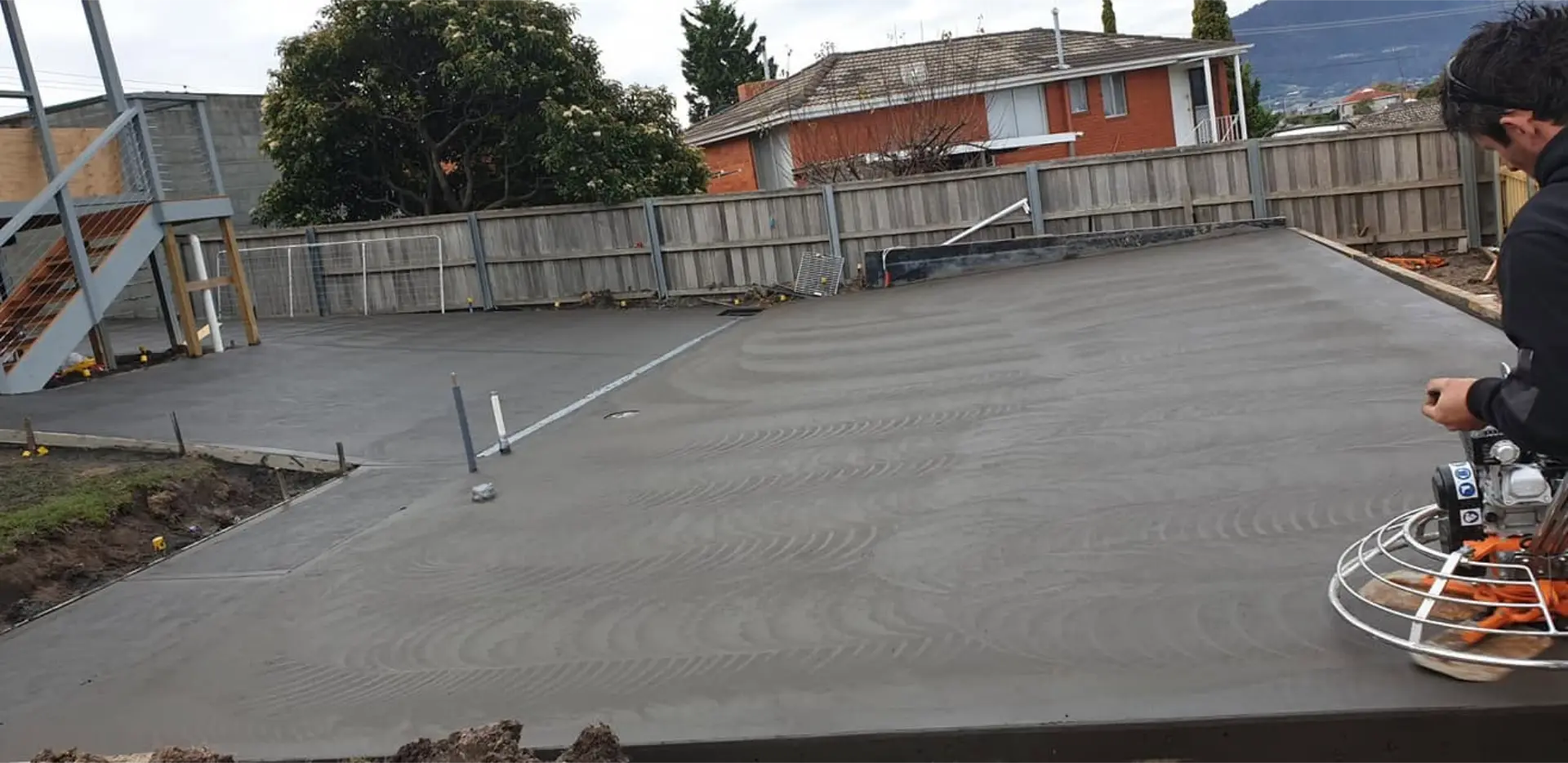
Recent residential concreting work
Jobs we have set out, poured and trowelled ourselves around Hobart and the surrounding districts.
Where Residential Concrete Usually Goes
Residential work spans a wide range of jobs, and these are the ones we're asked for most.
Footpaths and pathways
A properly graded path sheds water instead of holding it, so it stays safe underfoot year round. We set the fall before we form up, not after.
Patios and outdoor living areas
An outdoor slab has to tie into the house without trapping water against the wall. We work out levels and drainage first so the finished area drains away from the building.
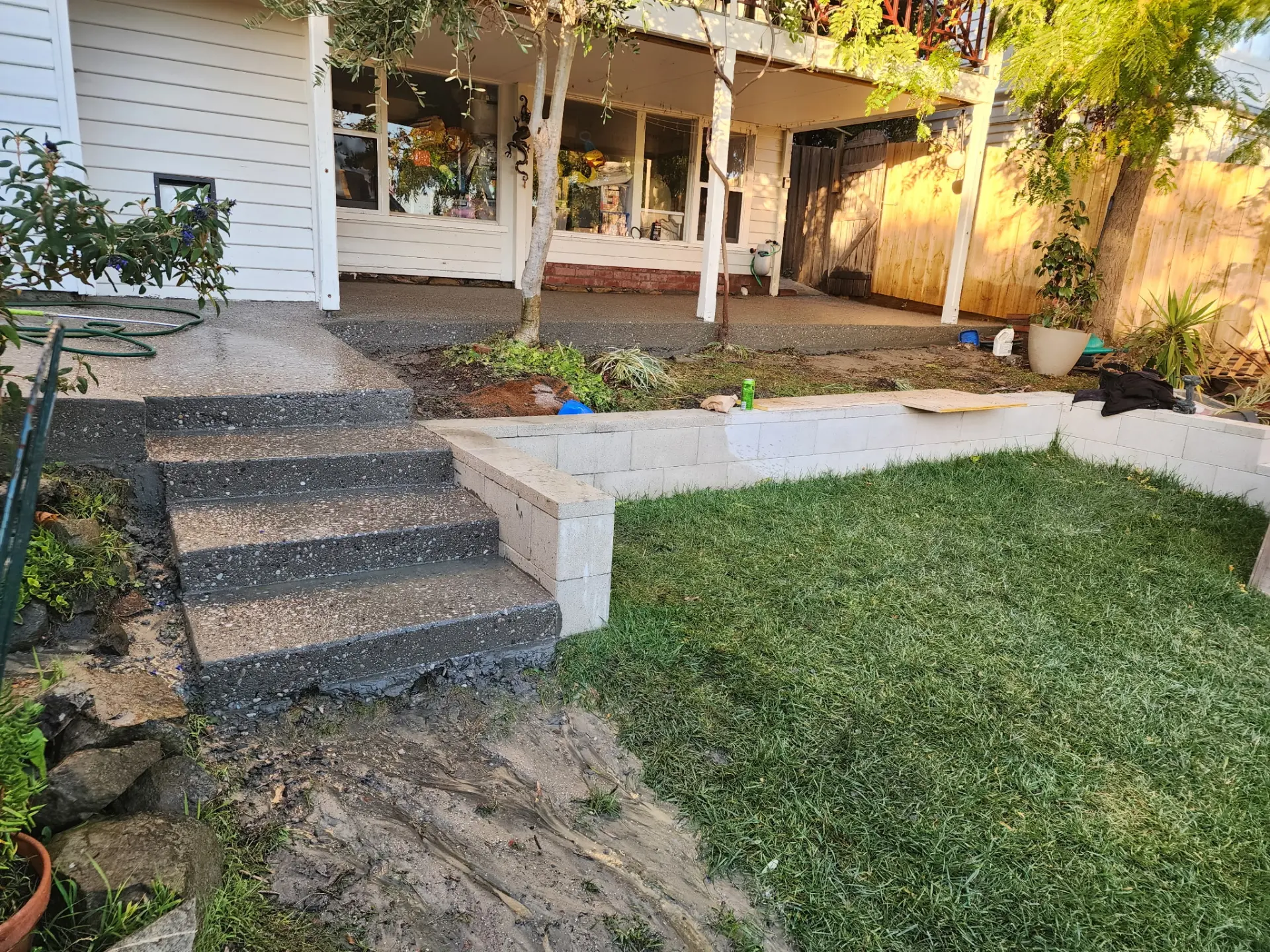
Steps and landings
Uneven or cracked steps are usually a base problem rather than a surface one. We take them back far enough to fix the cause before pouring anything new.
Small custom pours
Bin pads, garden edging, tank bases and odd-shaped fills come up regularly. If we can form it and pour it, we'll price it.
Tell us what needs pouring and where it is.
Talk to Us About Your Residential Concreting Job
Small jobs need the same groundwork as big ones. Call 0429 062 617 and we'll come and look at yours.
Residential concreting questions we get asked
Most residential slabs and paths use steel mesh or bar to control cracking and spread load across the surface. The right reinforcement depends on what the concrete will carry and on the ground underneath it.
Concrete shrinks slightly as it cures, so a degree of movement is normal rather than a fault. Control joints are cut or formed in at planned spacings so shrinkage happens along a straight line instead of wandering across the surface.
The area is excavated to depth, the base compacted, and formwork and reinforcement set to the finished levels. Drainage and fall get worked out at this stage, because neither can be corrected once the concrete is down.