
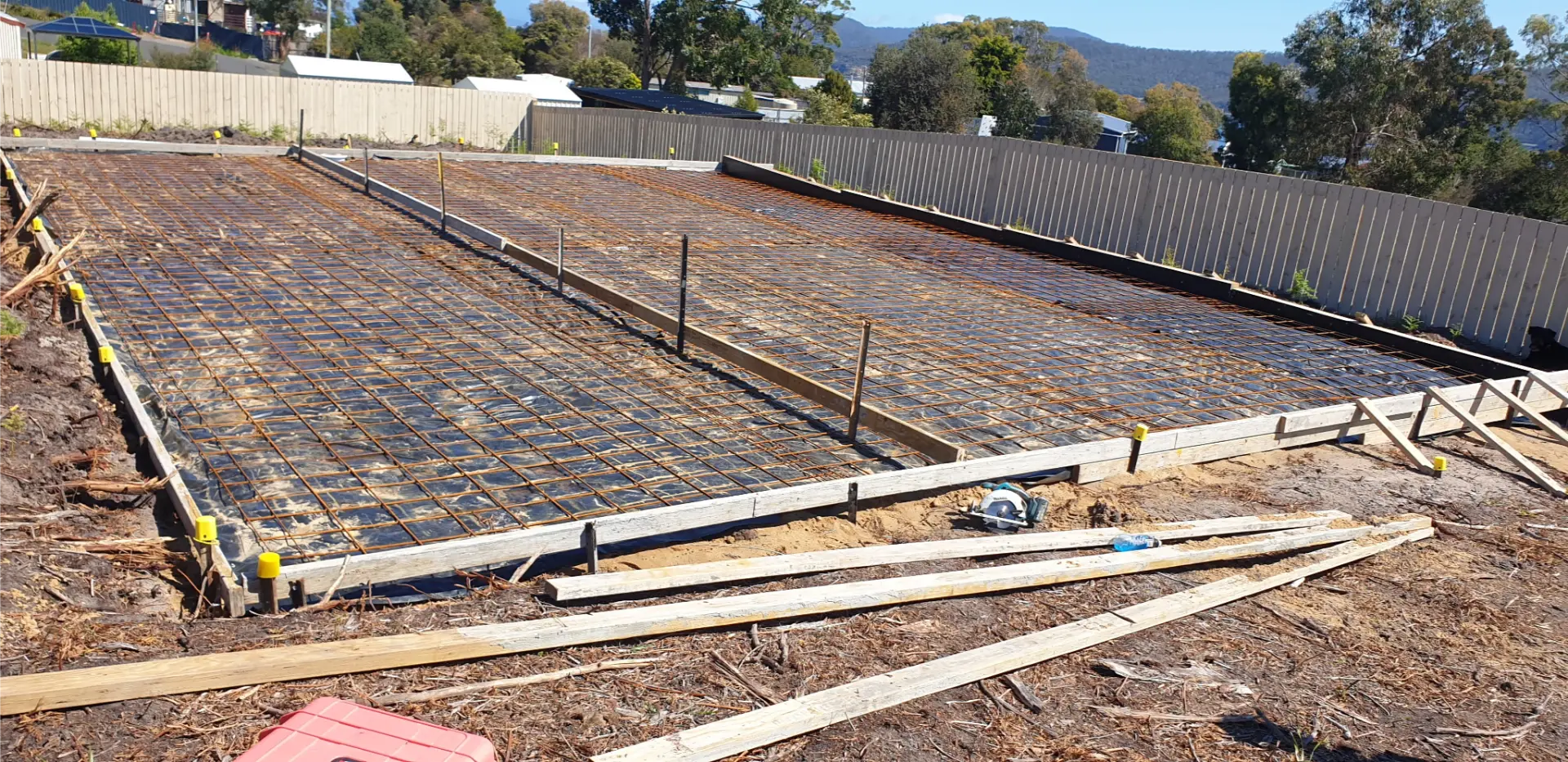
The Structural Work Nobody Sees
Footings do the least visible and most important job on any build. They carry the load of the structure above and spread it into ground that varies from one side of a block to the other. At Volcanic Creations Concreting, we excavate, form and pour concrete footings in Hobart for new homes, extensions, decks, retaining structures and sheds. Trench depth, width and steel placement come from the engineer's design and the soil classification, not from what happened to work on the last job down the road. We also handle the tie-in where footings meet a concrete slab, so the two work as one properly detailed system. Call 0429 062 617 to get your footings booked in around the rest of the trades.
Recent footings work
Jobs we have set out, poured and trowelled ourselves around Hobart and the surrounding districts.
How We Approach Footing Work
Footings are unforgiving because they get covered up, so we work through the same checks every time.
Excavation to design depth
We dig trenches to the depth and width the engineer specified rather than to a convenient dimension. Reactive clay soils in particular need every millimetre they're given.
Steel placement and cover
Reinforcement has to sit with enough concrete around it to keep moisture away from the bar. We position steel and chairs so the cover holds along the full run, not just at the ends.
Stepping on sloping sites
Few blocks are level, so footings often step down the fall in stages. We plan those steps so every section still achieves full depth into undisturbed ground.
Coordination with other trades
Plumbers, electricians and builders all need access before the pour closes the trench. We schedule around them so nothing gets buried that shouldn't be.
Talk to us before the other trades are booked.
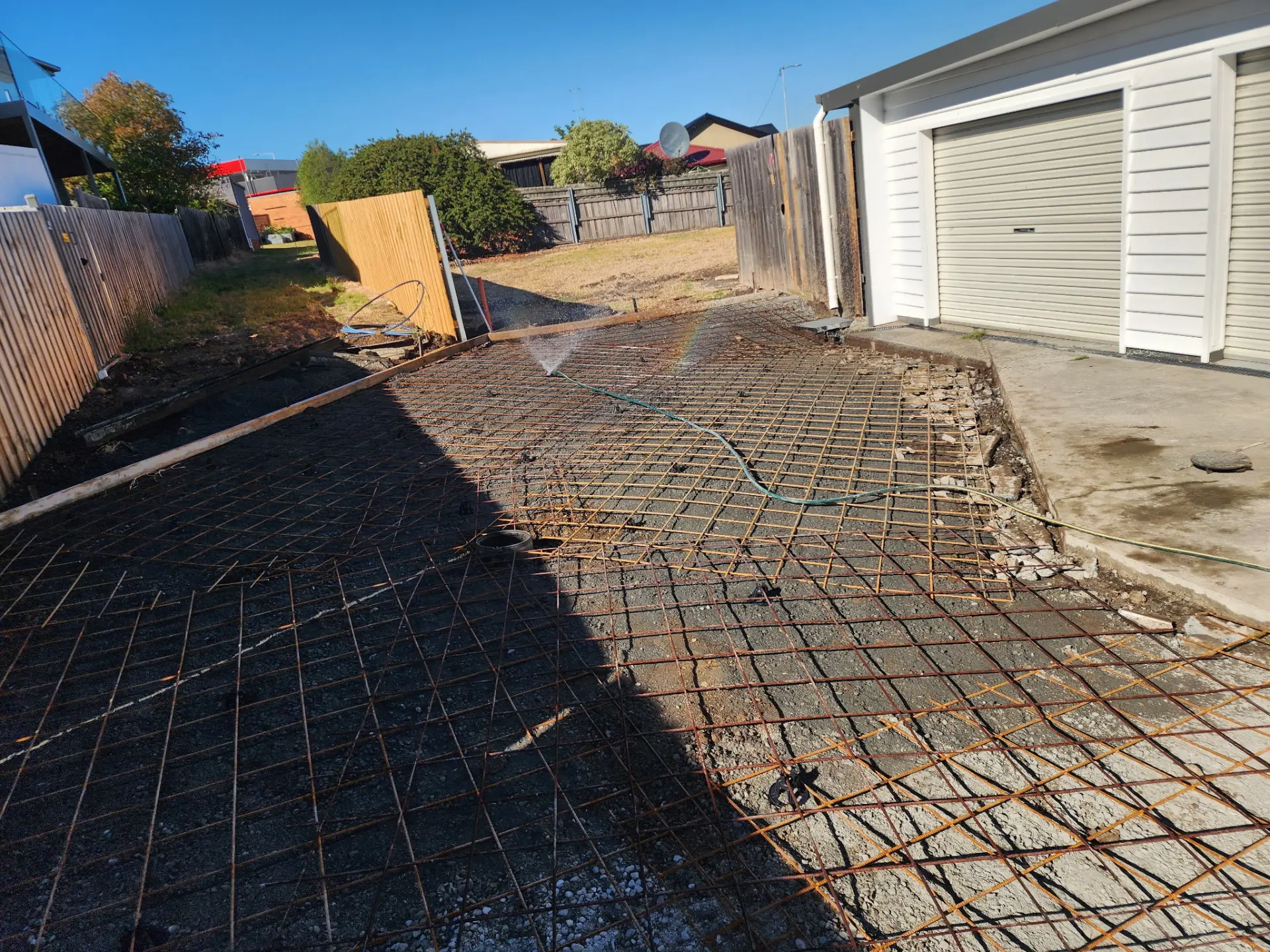
Talk to Us About Your Concrete Footing Job
Once the trench is filled, nobody can check the depth or the steel again. It has to be right the first time. Call 0429 062 617.
Footings questions we get asked
Strip footings run continuously beneath a wall to spread its load along a line. Pad footings are isolated blocks carrying a concentrated point load, such as a post, pier or column.
Depth comes from the soil classification, the load of the structure above and how far down stable, undisturbed ground sits. A geotechnical report or an engineer's design sets the figure for each individual site.
Water sitting in an open trench weakens the base and can wash out the mix, so we pump out and inspect a trench before any concrete goes in. Continuous heavy rain usually means postponing rather than pouring.